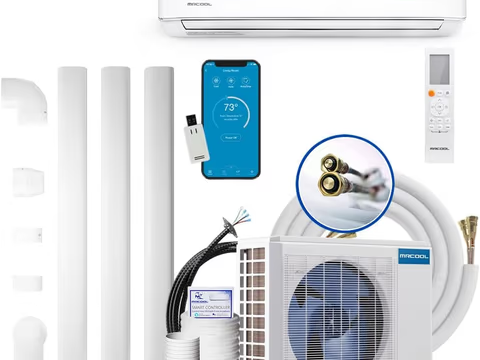
Best efficiency
Mini-splitENERGY STAR
MRCOOL DIY 4th Gen 12K
Cooling
12,000 BTU
Covers
500 ft²
Efficiency
22 SEER2
Noise
32 dB
$1099 est.
typical retail pricePhoenix is America's hottest major metro — 110°F+ weeks every summer with overnight lows that barely drop. The desert's saving grace is dry air, which changes the equipment math: less moisture to wring out, but extreme outdoor temperatures that punish compressors rated for 95°F test conditions.
Updated June 2026
Check the unit's maximum rated operating temperature — budget units derate badly above 105°F exactly when you need them most. EER (steady-state efficiency at high heat) matters more than seasonal SEER here. Evaporative ('swamp') coolers work in Tucson's shoulder seasons but can't carry a Phoenix July.
Estimated at Arizona's average residential rate (~14¢/kWh, approximate) and 8 hours/day. "Per season" assumes 8 cooling months. Your utility rate and usage will vary.
| Unit | Efficiency | Est. / month | Est. / season |
|---|---|---|---|
| Senville LETO SENL-12CD Mini-split | 21.2SEER2 | $23 | $184 |
| LG Dual Inverter LW1022IVSM Window | 15CEER | $23 | $184 |
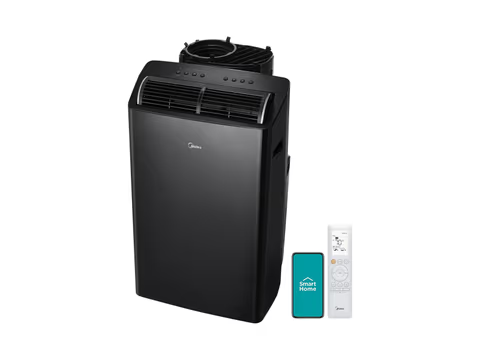
| BLACK+DECKER BPACT14WT Portable | 6.1CEER | $80 | $640 |
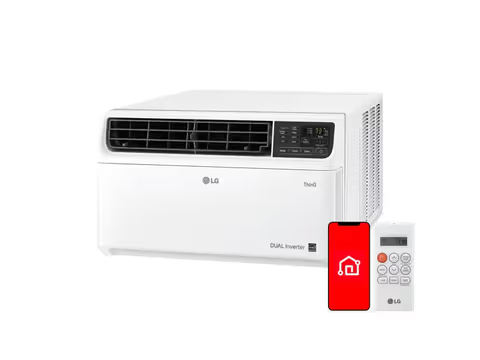
Desert loads run about 8% above the national baseline (our Hot & Dry zone applies this). Sun exposure is the bigger swing factor: a west-facing Phoenix room with afternoon sun can need 20% more capacity than the same room shaded — set Sun exposure to 'Sunny' in the calculator.
SEER averages efficiency across a mild 'season'; Arizona summers aren't mild. EER measures efficiency at a steady 95°F — much closer to a Phoenix afternoon. Two units with the same SEER can differ meaningfully in EER, and the higher-EER unit wins in the desert.
Single-hose portables struggle above ~105°F because they pull in hot outside air through wall gaps. If a portable is your only option, choose a dual-hose inverter model — and expect a mini-split or window unit to outperform it during heat waves.
Electricity rates are approximate state averages; check your utility bill for your exact rate.