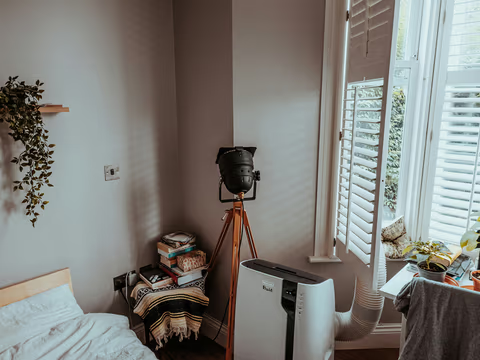
The verdict: buy dual-hose (or hose-in-hose)
Portables are the most misleading AC category: marketing BTU numbers overstate real cooling more than any other type, and the difference comes down to hose design. Single-hose units create negative pressure that sucks hot air back into the room; dual-hose units don't. Our advice after comparing all 12 portables we track: if the room matters, buy a dual-hose inverter unit. Period.
Best overall: Midea Duo (12K and 14K)
The Midea Duo MAP12S1TBL is the portable the testing press keeps crowning, and our data agrees: a hose-in-hose inverter design that sidesteps the single-hose penalty, real ~450 ft² coverage, and far quieter operation than the category norm. Street price hovers around $579 for the current MAP12S1TBL-A revision.
For bigger rooms, its sibling the Duo 14K covers ~550 ft², runs at a remarkable 42 dB on low, and frequently sells in the $450 range — arguably the best portable deal going.
Most efficient compact: Hisense dual-hose inverter
The Hisense HAP0824TWD is the efficiency sleeper: a compact dual-hose inverter posting 13.5 CEER — better than many window units — at 42 dB and ~$330. It's sized for rooms under ~350 ft², and summer stock sells out, so move early.
Traditionalists can still trust the Whynter ARC-14S, the long-running dual-hose benchmark: no app, no inverter, but proven cooling speed and an auto-drain system that has survived a decade of summers.
If you must go single-hose
The LG LP1419IVSM is the single-hose done right: a dual-inverter compressor brings noise down to 44 dB and delivers a strong 10,000 BTU SACC. And at the budget end, the ~$300 SereneLife SLPAC10 is Amazon's perennial bestseller — fine for occasional use in a small room, as long as you understand a basic single-hose unit cools far below its 10,000 BTU label.
Setup mistakes that cost you cooling
Three fixes recover real capacity from any portable: seal the window kit (foam-tape every gap — leaks feed hot air straight back in), keep the hose short and straight (every extra foot and bend radiates heat back into the room), and insulate the hose (a $15 sleeve noticeably cuts re-radiated heat). Then size the room honestly — portables need every BTU they can get.
Featured units
Specs and running costs for the units referenced in this guide:
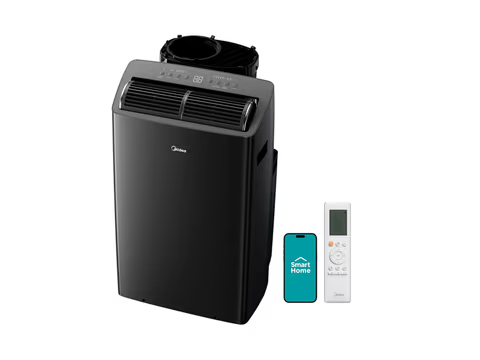
Midea Duo MAP12S1TBL-A
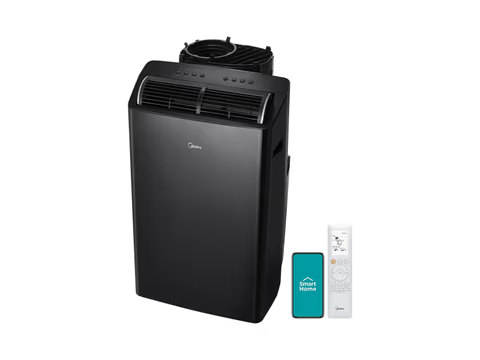
Midea Duo MAP14S1TBL
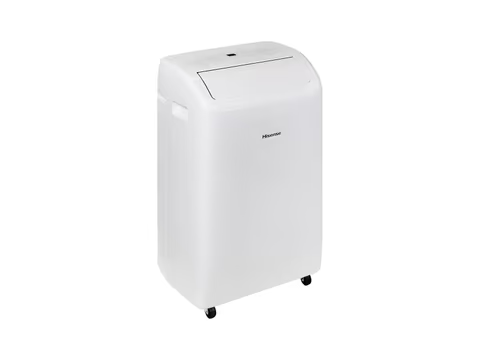
Hisense 8K Dual-Hose Inverter
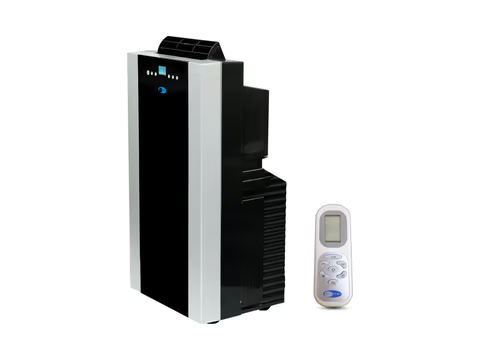
Whynter ARC-14S Dual Hose
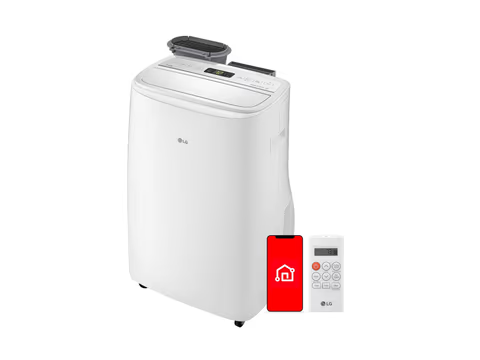
LG Dual Inverter LP1419IVSM
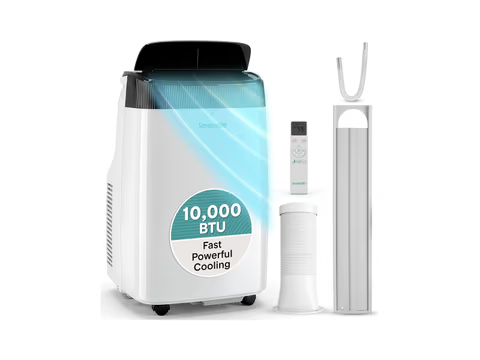
SereneLife SLPAC10
Frequently asked questions
Why is my portable AC so much weaker than its BTU rating suggests?
Because single-hose portables fight themselves: they blow indoor air outside through the exhaust hose, which pulls hot outdoor air back in through every gap in your home. That's why the DOE created SACC ratings — a "14,000 BTU" single-hose unit often delivers 7,000–8,000 BTU of real cooling. Dual-hose and hose-in-hose designs avoid most of this penalty.
Dual-hose vs single-hose — how much does it actually matter?
A lot. Dual-hose designs draw their cooling air from outside instead of de-pressurizing your room, typically delivering 20–40% more effective cooling from the same compressor. If you are choosing between a dual-hose unit and a bigger single-hose unit at the same price, take the dual-hose.
Do portable ACs need a window?
They need an exhaust path, which is usually a window kit — but a sliding door kit or a dryer-style wall vent works too. With no exhaust path at all, a portable AC just recirculates heat and will not cool the room.
Not sure what size you need?
Our calculator factors in climate, sun, and insulation — and estimates your monthly running cost.
Run the BTU calculator